
The Coach Well, Lead Well Program
You have only ever had tools for half the job.
You were trained well. You have instruments for the technical half of the work: the diagnosis, the plan, the curriculum. Nobody gave you a tool for the part where a person hasn't decided what they really want yet.
Coach Well, Lead Well gives you the missing half.
The people who care the most are the ones most likely to burnout.
If somebody asked you what's hard about the work, you'd probably land on some version of the same four sentences:
I can see what they're capable of. They won't move. I've tried everything. It's costing me more than I can keep paying.
Advisors say it about a student. Managers say it about the person who's quietly checked out. Physicians say it about a patient. Consultants say it about a client. The noun changes. Nothing else does.
Underneath it, the same three questions keep surfacing, usually in almost identical words. Where's the line? What's actually my role here? I don't know when we're successful anymore.
That last one explains more than any wellness framing ever will. If you’re working toward an objective you never finished defining, you will never feel like you’ve finished the job. You’ll just feel vacant. So you take it home, replay the conversation on the drive, and answer the email at nine at night, because nothing ever told you that you were done.
It's a tooling problem, not a caring problem.
When the real obstacle is that the person you’re sitting across from hasn't decided they want the thing yet, you reach for the only tools you were given. You give more advice, harder. Another resource. A third follow-up.
And the harder you work, the more it feels like a judgment on you when nothing changes.
Every resource offered to someone who hasn't named what they want lands as noise, empty cheerleading, or as one more piece of evidence that they're failing. Your advice wasn't the problem. Your timing was.
Tooling problems are fixable.

Three questions, small enough to use in a hallway.
What do you want. What are your options to get there. What are you going to do about it.
Wanting, deciding, doing. That's the method, and it's deliberately small enough to run in the fifteen minutes between meetings.
Underneath it sits the Thought Model, the diagnostic that shows a person their own thinking. Data, thought, feeling, behavior, outcome. Data is what's provable in court. A thought is an optional interpretation. Most of what feels like an impossible situation turns out to be a thought sitting where data should be, and once someone sees that on paper, the conversation changes.
Around those two, you learn the distinctions that do the daily work.
Ask before you tell. Four seconds. "Would it help if I shared a few options, or do you want to keep thinking out loud first?" Now they've said yes to help, which means they can use it.
Coaching is a consent-based activity. You can't coach someone who isn't ready. Knowing that ends an entire category of frustration.
Getting out of the pool. Empathy puts you in the water with them. Coaching requires getting out. Both are useful. They aren't the same move and they shouldn't happen at the same time.
Frustration is a gift. It's an invitation to honor something that matters to you, which makes it information rather than a failure of professionalism.
Boundaries versus aspirations. If you want something and you're not willing to take action for it, it isn't a boundary. It's an aspiration.
Detached commitment. One hundred percent committed to the outcome. Zero percent responsible for another person's thoughts, feelings, or behavior.
Nobody is asking you to do less of your actual job. You keep your expertise and keep giving good advice. What changes is what you do with the part advice was never going to reach.
Give the advice. Coach the doing.
Proven, and unusable in the hallway.
The research that reliably changes behavior is locked where you can't reach it: the therapy hour and the journals. Cognitive behavioral theory from Beck and Ellis. Self-efficacy research from Bandura. Motivational interviewing from Miller and Rollnick. Appreciative inquiry from Cooperrider and Srivastva. The Gottman work on repair.
All of it demonstrated. None of it built for a fifteen-minute conversation with a real person in front of you.
The work was rebuilding it into one method a busy person can actually run, without being a therapist and without wanting to be. It's in use across advising, clinical care, consulting, law, and social work.
And it doesn't stay at work. Same brain in every room.
This seat gets you where you want to be.
Confident in the conversations you currently dread. Boundaries you actually keep. Advisees who own their own results. And a definition of success for your work that's finally yours.
$2,000. One payment, nothing renews, and there's no version of this that somebody else got and you didn't.
-
The full curriculum. About eight hours, self-paced, video with subtitles plus audio. It's built as a sequence rather than a philosophy, so you'll have something usable in your first week, not your last.
-
The weekly coaching room. Thirty minutes, on Zoom, every week, ongoing, at no additional cost. Bring something and get coached, or come and watch and take notes. It's optional, so it's an opportunity rather than one more standing meeting. And it's cross-institutional on purpose: nobody from your building is in that room, so you can say the real thing.
-
Certification. There's exactly one, every seat has it, and it never expires. Verified completion, a demonstration of the method on real situations, and an interview with a program coach. No exam and no deadline. It goes on a CV, into a promotion file, and into the conversation where you explain why the money was well spent.
-
A digital interactive portal. When something happens Tuesday afternoon, you tag a coach in it and get a real answer, instead of writing it on a sticky note and hoping you still care by your next session.
-
Lifetime access to all of it. No renewal, no expiration, no cohort moving on without you. Take a hard month and lose nothing. Come back in a year and it's all still there, including the room.
-
Six private coaching sessions, thirty minutes each, with Tarah or a certified Coach Well, Lead Well coach. This is the $3,500 option. Not skills practice on a hypothetical. Most people arrive planning to rehearse the method and end up working on the thing they've actually been turning over on the drive home. Thirty minutes is long enough to take one real situation all the way to a decision, and short enough that a busy person actually books it.
Thinking about this for your team?
If you're the person your team escalates to, twelve seats brings us to your building for a full day with everyone in the room. See how this works for a team by booking a Leadership Consult.
This room makes everything else more valuable.
You learn as much watching someone else get coached as being coached. Almost everything that goes on the board applies to everyone in the room, so you don't have to be the one talking to get value from it.
And hearing how another field, role, human handles the same problem is perspective you can't get inside your own building.
It's ongoing, not a cohort that ends. People who certified in 2021 are still in that room today.
What it can look like a year from now.
A department chair we worked with took two weeks off last month. International, real distance, phone mostly off, in the middle of active hiring, program development, and a round of organizational change.
A year earlier that trip would have been unthinkable. Most of it ran through one person, with two or three key people covering the rest.
What she said on getting back was this: "We have a backup for every single thing that we do."
Nobody prescribed rest. She'd spent the year coaching instead of solving. Clarifying who owned what. Redesigning roles around what the work actually needed instead of automatically replacing the last person. Letting other leaders take on things she used to handle herself.
Being able to leave wasn't the point. It was the proof. The real result was a department that no longer ran through one person.
And if that sounds like being needed less, it's worth saying differently. You being less burdened isn't you doing less. You will be leading at a higher level, and you will finally have the room to.
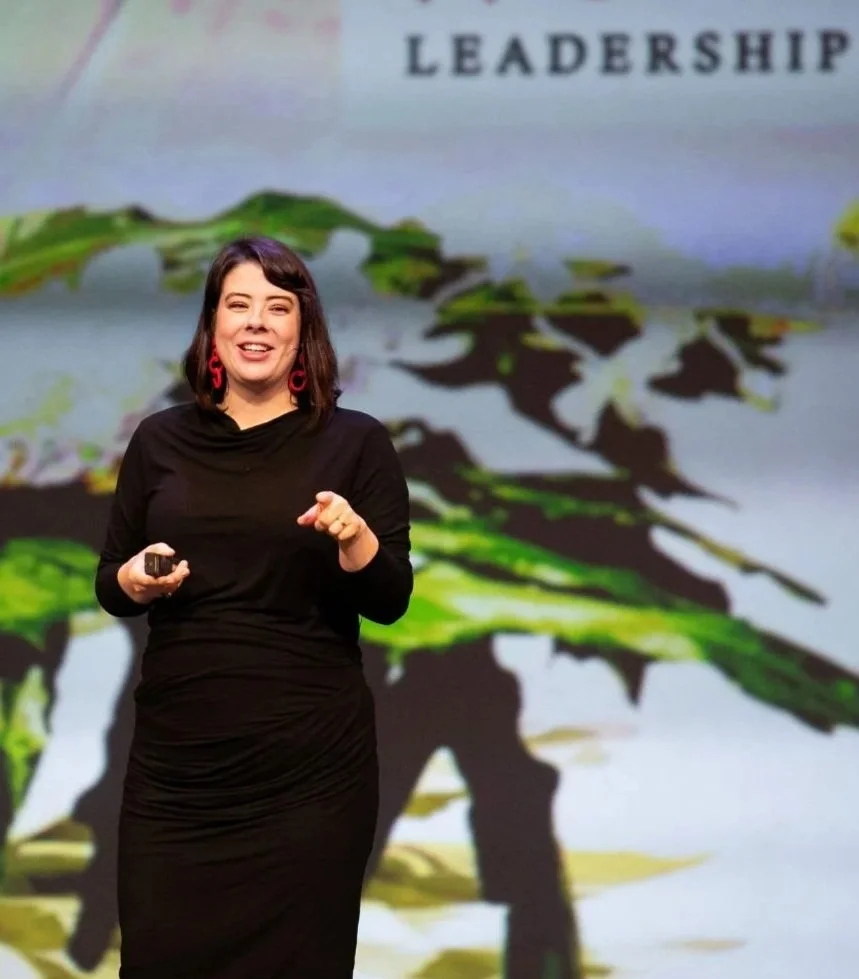
About a hundred professionals across multiple institutions have come through this work. Alumni who certified in 2021 are still in the group coaching room today.
"Your coaching makes a difference in our team every day. I am certain one reason we have such a good environment is because so many of our team are engaged in coaching and thought model work."
Nicole, certified Coach Well, Lead Well coach since 2021
"The coaching really helped me to see things as they needed to be seen and not how I wanted to see them. We focused a lot of the coaching for work, but it was so beneficial in my personal life."
Meka, certified Coach Well, Lead Well coach since 2021
"I feel confident in the tools that I'm giving and in the advice that I give, instead of just fixing whatever issue someone is having. I think this will help the people I work with feel more confident in their ability to problem-solve."
Mary, currently certifying
See more transformations here.
What it costs to not do this.
These are the costs you never put on your personal budget line, which is why they're the ones that go unpaid for years.
67 hours
The nine o'clock emails.
Twenty minutes a night, five nights a week, most of the academic year. Roughly sixty-seven hours of work nobody assigned you, nobody counted, and nobody will thank you for. It's the first thing that goes when you have a definition of done, because most of it was you trying to fix a feeling.
12
Conversations you'll postpone.
About one a month is the honest average. None of them get easier and none of them stay the same size. A conversation you avoid in September arrives in February as something bigger, and by then you're not having the conversation, you're managing what it became.
1
The line you didn't get to draw.
Most people don't draw their line. They find it by running out. That's the only item on this list without a number on it, because you don't get to pick the year it happens.
What it costs.
$2,000.
If you work another fifteen years that works out to $133 a year, and you keep the curriculum, the room, and the certification for all of it. Most people in this field spend more than that on one conference they've forgotten by February.
There's no upgrade tier and no premium version. Nobody in this program has better access than you do, whether they came in alone or arrived with thirty colleagues.
What this asks of you.
One and a half to two hours a week, for six months. Most people finish inside that window. The curriculum is self-paced and your access never expires, so a hard month costs you nothing and there's no cohort moving on without you.
We won't promise you can make anyone change. This program teaches the opposite, and it would be strange to sell you a result that belongs to somebody else. What we will promise is the part that's ours: the method, the room every week, a coach who answers you, and a definition of done you'll write yourself. What happens after that is yours, which is the entire point.
Worth asking before you begin.
"I've already done a communication training."
That training taught you what to say. This teaches you what's yours to own. Those are different problems, and the second one is why you're tired. Most communication training makes you better at the conversation and does nothing about the drive home.
"Isn't this soft skills? My work is technical."
Which is exactly why the method is built from cognitive behavioral theory, motivational interviewing, appreciative inquiry, and self-efficacy research, with the sources named. It's also why it's taught as a repeatable sequence rather than a philosophy. Skeptics tend to be the fastest adopters here, because the material holds up when you push on it.
"I'm not a therapist, and I don't want to be."
Good, and it's the question we answer first, every time. Therapy takes the past to functional. Coaching takes the future to created. The program teaches the distinction explicitly, along with when and how to refer out. Coaching is a consent-based activity with a defined edge, and knowing exactly where that edge is makes you less enmeshed, not more. Most people describe this as the part that gave them their evenings back.
"I don't have time for this."
One and a half to two hours a week, self-paced, and nothing expires, so a hard month costs you nothing. Every week, on Zoom, thirty minutes. Included, ongoing, and optional, so it's an opportunity rather than one more standing meeting. But the honest answer is that the problem usually isn't hours. It's that "done" was never defined, so nothing ever ends. That's a definition problem, and definitions are cheap once somebody hands you one.
"What if I spend the money and nothing changes?"
Then it'll be for one of two reasons, and both are worth knowing now. Either you never brought a real situation, which is the only thing that separates the people this works for from the people it doesn't. Or you're looking for a way to make somebody else move, and this program will keep telling you that isn't available. We will be holding you accountable for what is yours, and helping you release responsibility for what isn’t.
How to start.
Get immediate access. Curriculum access, group coaching invites, in-person sessions scheduled (if purchased), and you get the frameworks you can begin using today!
Or, if you’re curious about bringing this to your team, book a Leadership Consult. An hour. You bring the situation that's costing you the most, and you leave with a written definition of success for that role and one conversation to run next week. Free, and there's no pitch unless you ask for one. If you’re a fit and ready, then, we can confirm the details, pick a date, and get started!
Buying this for your team?
If you're the person your team relies on or escalates to, this is great news for you! This works extremely well as a group. There are in-person delivery options and ways to build team-specific group coaching. The Leadership Consult is where we work out the shape of it. Let’s talk!
FAQ’s
-
Yes, and it works great that way. Teams of three or more also get dedicated group coaching and a team visioning workshop.
-
Plan on six months at roughly 1.5-2 hours a week. This includes group coaching time. Curriculum access is permanent and certification has no deadline. Private sessions are used within six months of enrollment.
-
Tarah, and certified Coach Well, Lead Well associate coaches who are working professionals with real leadership experience in fields like yours.
-
Three parts. Verified curriculum completion, a demonstration of the method applied to real scenarios and reflections, and an interview with a program coach. No exam, no deadline, and it's intentionally less punishing than the professional accreditations your people already hold. That's a design decision, not a shortcut. The point is competent use, not credential theater.
-
Then they aren't, and that is totally ok. Also, the program says so out loud. Coaching is a consent-based activity. We'd rather that surface in week two than have someone sit through six months of something they didn't choose.
You care more than the job formally requires.
That's not a flaw. It's the reason you’re good, and it's the reason the work matters to you.
You just don't have a framework for what to do with the excess. Come learn and apply this one and you won’t care less. You get the chance to keep doing this work, with greater impact, renewed energy and stronger outcomes for the next ten years.